What Meta released
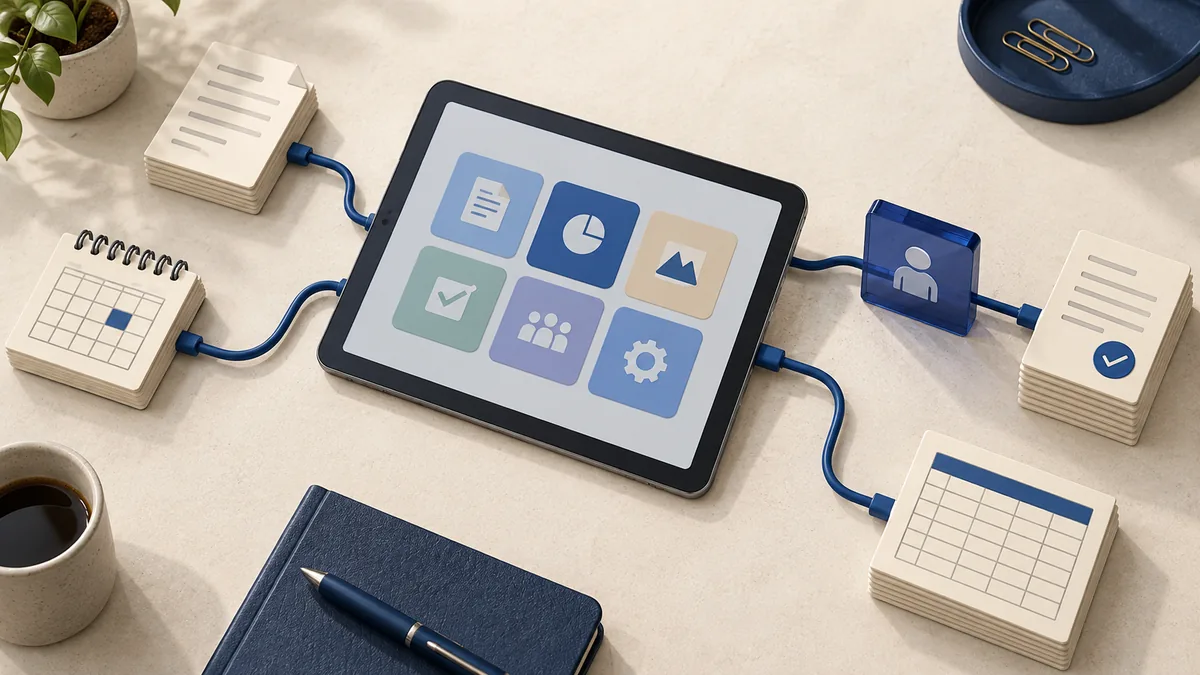
Meta Platforms' Muse app, a consumer AI assistant, received a version 10.0 update whose App Store release notes are dated October 7, 2026. The notes list two changes that matter to business users. The app now runs on the iPad, and it can connect to a set of business tools. The connector list names Asana, Canva, Dropbox, Figma, QuickBooks, GitHub, Klaviyo, Zoom, and Meta ad accounts, along with Granola and Notion.
Sarah Perez of TechCrunch reported the iPad release on October 7, at 18:30 UTC, and her report independently confirms the update and its business connectors. The App Store exposes a release date only, so the exact release hour is unavailable. This is a product update, not breaking news. Muse appeared on mobile roughly a month earlier, so the iPad release extends an existing consumer app rather than launching a new product.
The same listing states the guardrails Meta describes. Muse can link apps, and the publisher says users can approve actions, revoke connectors, and review an activity log. The listing also warns that Muse may be inaccurate or take unexpected actions. The US listing requires iPadOS 18 or later and carries an 18+ age rating, and its privacy labels are developer supplied rather than verified by Apple. A connector appearing in release notes is a publisher statement about availability. It is not evidence that every connection has been tested end to end, and Detailed In Design did not install or test the app.
What this means for your business
The section above is reporting. What follows is analysis from Detailed In Design. The update matters less for what Muse can do on day one than for the situation it places in front of a small business. Many service companies keep customer inquiries in email, marketing work in one tool, quotes in spreadsheets, and invoice records in an accounting system, and no single person owns the path from first request to paid invoice. When an assistant can reach several of those systems at once, the practical question becomes who approves what.
Detailed In Design could build that discipline as a custom system: a website intake and customer record workspace. A customer submits job details and photos once through a form on the company website. The workspace stores the record, prepares a draft quote and a follow-up checklist, and connects to the company's approved CRM and accounting records through their available APIs. Customer messages and any financial action, such as a quote, a payment link, or a refund, route to a named staff member for approval before anything is sent or changed. An activity log records who approved what, and when. Deterministic software handles the record updates and the permission checks.
The expected benefit is concrete but modest: fewer retyped details, clearer ownership of follow-up, and a consistent review step before anything customer-facing leaves the business. We make no numerical savings, speed, or accuracy promise. The limitations are real. The system depends on client account authorization, API availability and permissions, data minimization, and a designated source of truth for records. Drafts can be wrong or omit context, so review of drafts and financial actions is not optional. Connector and region constraints, operating system requirements, maintenance, and testing on real workflows all remain. App interface support does not replace organizational access controls, and no custom system is a guarantee of compliance, security, or successful autonomous execution.
This is a separate proposed Detailed In Design system. It is not a Muse product, not an integration we have deployed, and not a partnership with Meta. Our proposal would use ordinary software and permitted APIs; Muse's consumer connectors do not establish an embedding API for our solution.
A practical next step
If your team is evaluating an assistant with business connectors, start with one workflow instead of a platform decision. Map a single process from request to quote, and mark each step where a person must approve. That map becomes the specification for anything you buy or build, and it is the same map we use to scope custom software around human review gates. Before granting any agent more access, map one existing handoff. Talk to Detailed In Design about a scoped workflow review.
Attribution and scope
The iPad availability, connector list, approval and logging features, requirements, and age rating are attributed to Meta's App Store listing. The independent report is Sarah Perez's TechCrunch article of October 7, 2026. Detailed In Design did not test Muse or any connector. The intake and customer record workspace is a proposed custom build, not an existing product, a Meta integration, or a partnership. This article is an attributed synthesis of published reporting. Detailed In Design conducted no original field reporting.
Sources and original reporting
Share this story
Use More apps or Copy link for Instagram, Threads, YouTube, and other platforms.